







Khotachiwadi Strikes Back
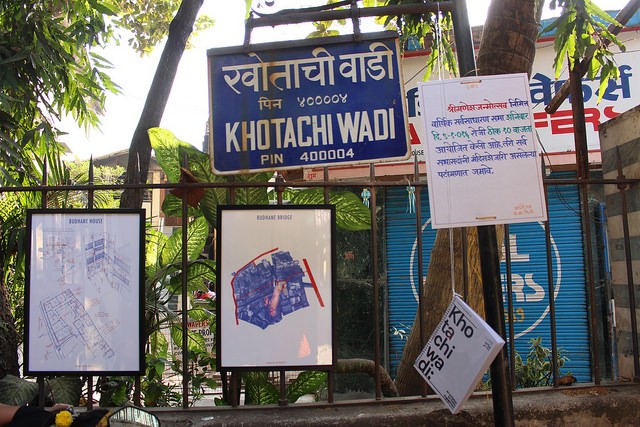
What do spray painted cats on walls, masked motorbikes and a pop-up staircase have in common? The Khotachiwadi Imaginaries workshop.
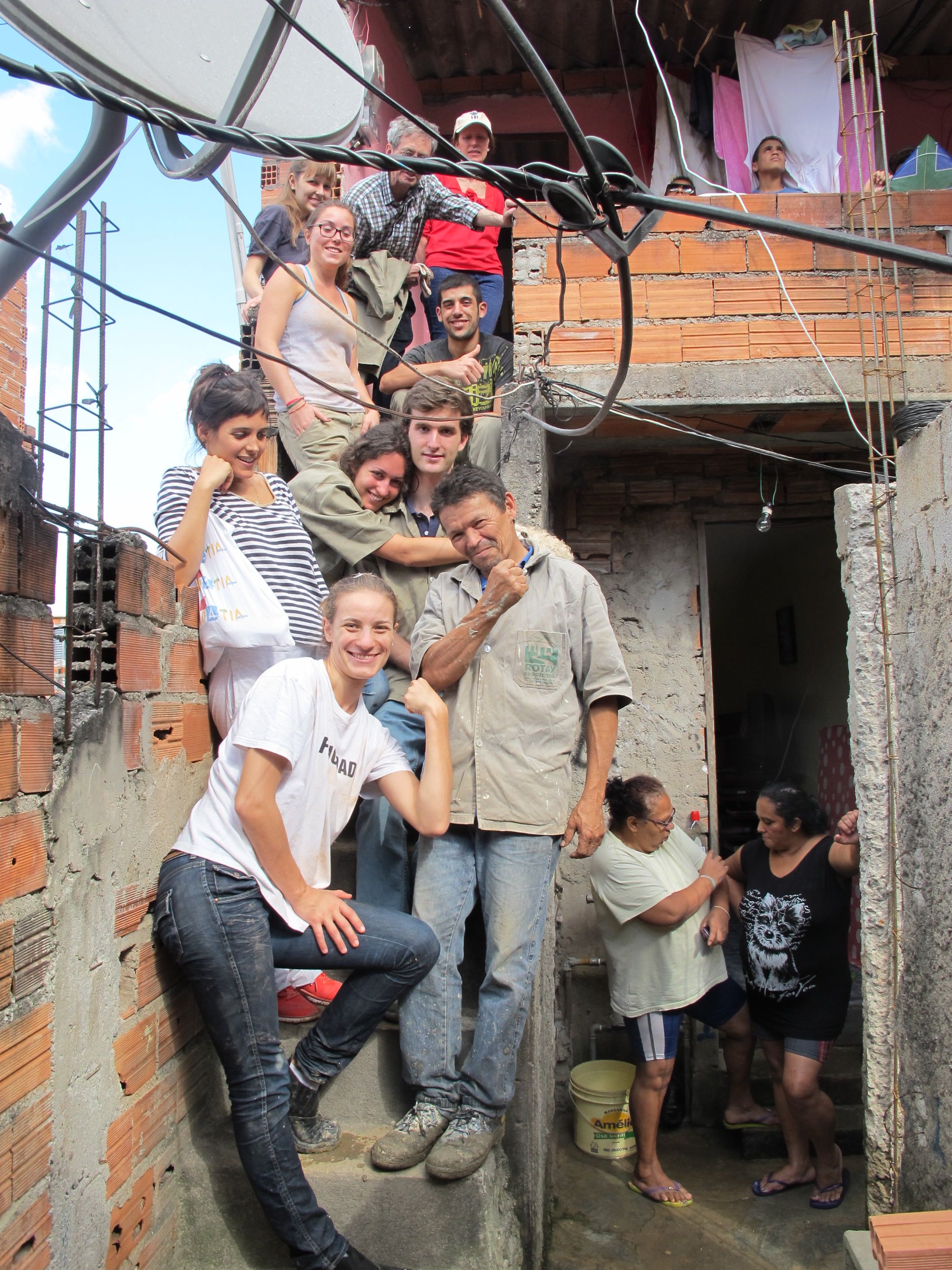
The urbz collective was born in Mumbai and we are now also active in Geneva, Paris and Bogota. We are driven by the concept of user-generated cities. We’ve learned to trust people’s capacity to respond to the challenges they are facing in Dharavi and many other homegrown neighborhoods around the world.
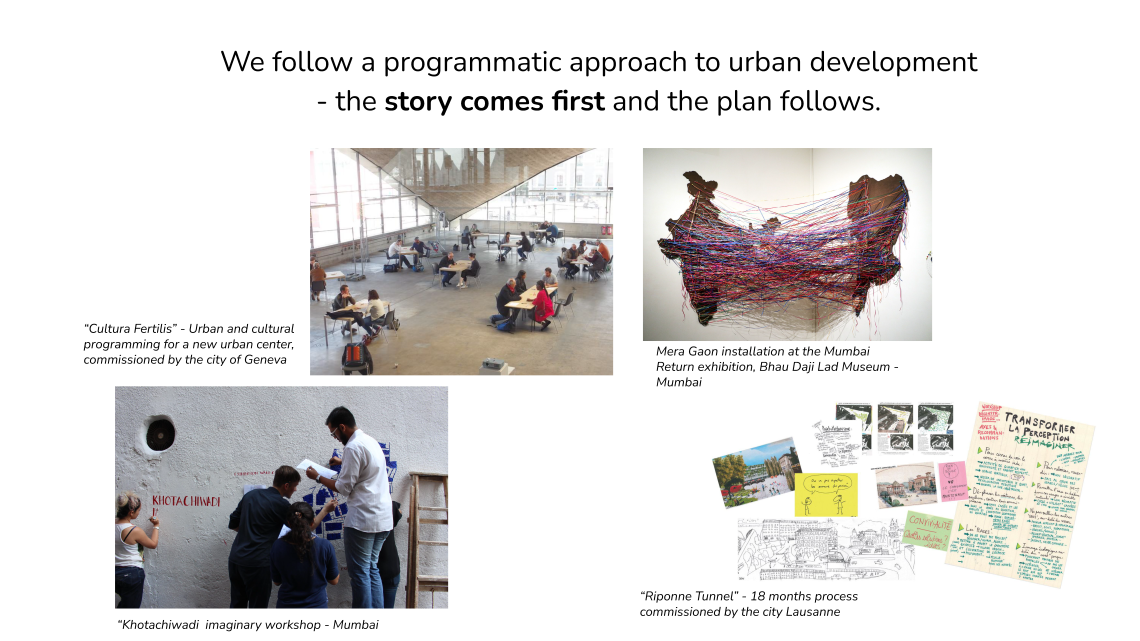
In Geneva we specialize in participatory urbanism. We create plans for neighborhoods, campuses, parks. We conduct consultation processes. We follow a programmatic approach to urban development - where the story comes first and the plan follows.
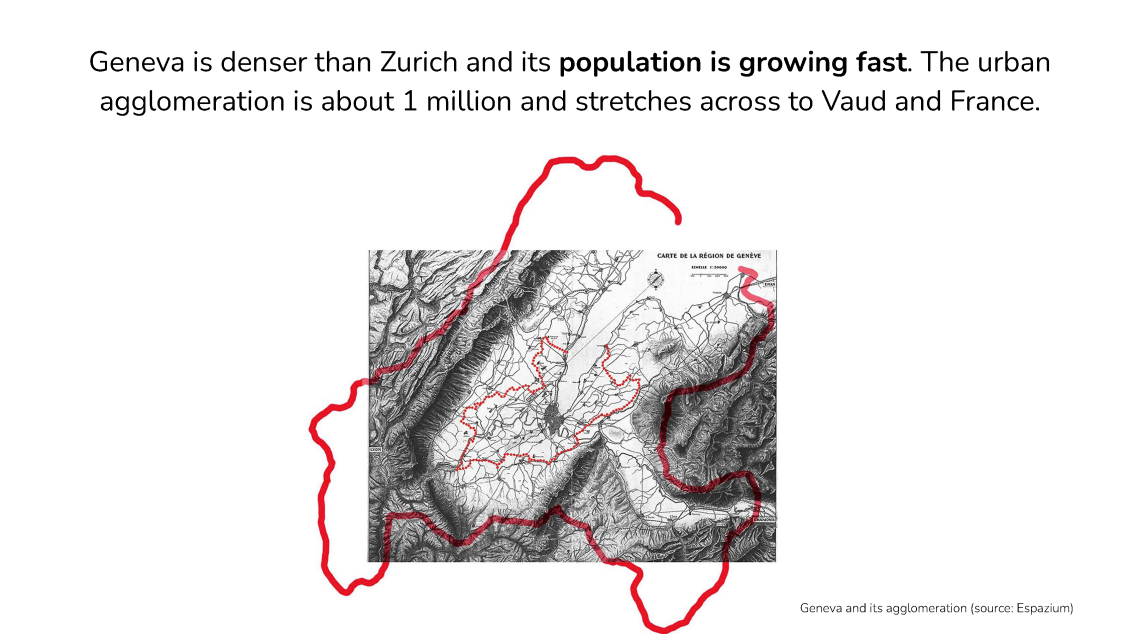
The urban agglomeration of Geneva is about 1 million people and stretches across to France and other parts of Switzerland. It is one of the most densely populated parts of Switzerland and it keeps on attracting newcomers from all over Europe. Geneva has already reached its maximum urban spread, as the remaining agricultural fields are protected and can’t be used to build housing or infrastructure. It must therefore build the city on the city, by densifying further existing neighborhoods and suburbs.
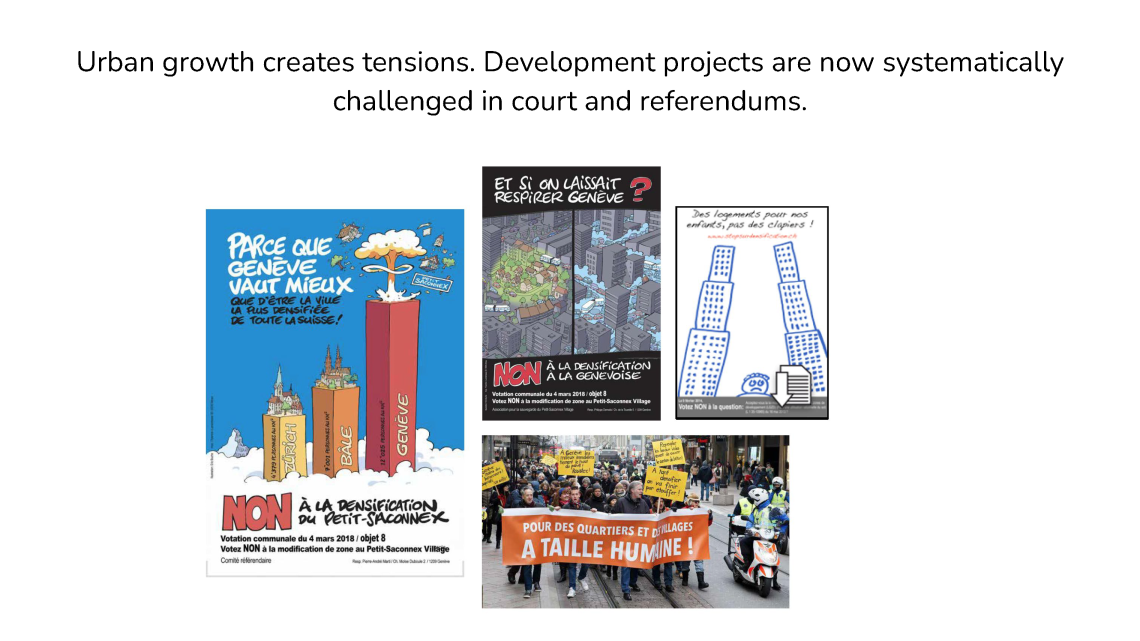
Urban growth creates tensions. People are fed up with large concrete buildings that are being built in every part of the city. Development projects are now systematically opposed and contested in court and referendums.
The urbz team fully empathizes with the opposition to the kind of mass urbanization that’s been happening for years in Geneva - just as it is happening at a different order of magnitude in megacities in Asia.
We call this kind of urban development “spreadsheet urbanism”. It is the result of the coming together of bureaucracy and speculation. It produces a generic urban form that can be seen all over the world.
Spreadsheet urbanism turns every citizen into a passive consumer of housing (Illich). It is hugely wasteful as it has little consideration for existing biotopes and built structures. It also divides every neighborhood into different functional spaces: housing, work, entertainment, parks.
In Switzerland we have the great chance of having several venues to express our opposition to a project - we get our voice heard by coming together as an association - and we have seen an explosion of residents associations in recent years - or we can vote. Opposition is costly. When a project is rejected by vote, it means that years of planification are wasted.
The issue with voting on urban projects is that it narrows down the choice to full acceptance or full rejection. As Hannah Arendt wrote, "The voting booth in which we cast our ballots is unquestionably too small, for this booth can accommodate only one vote." What we need is more scope for nuance and creative participation. This is why our deep democratic system needs to be completed with participatory processes in many different fields, including of course urban planning.
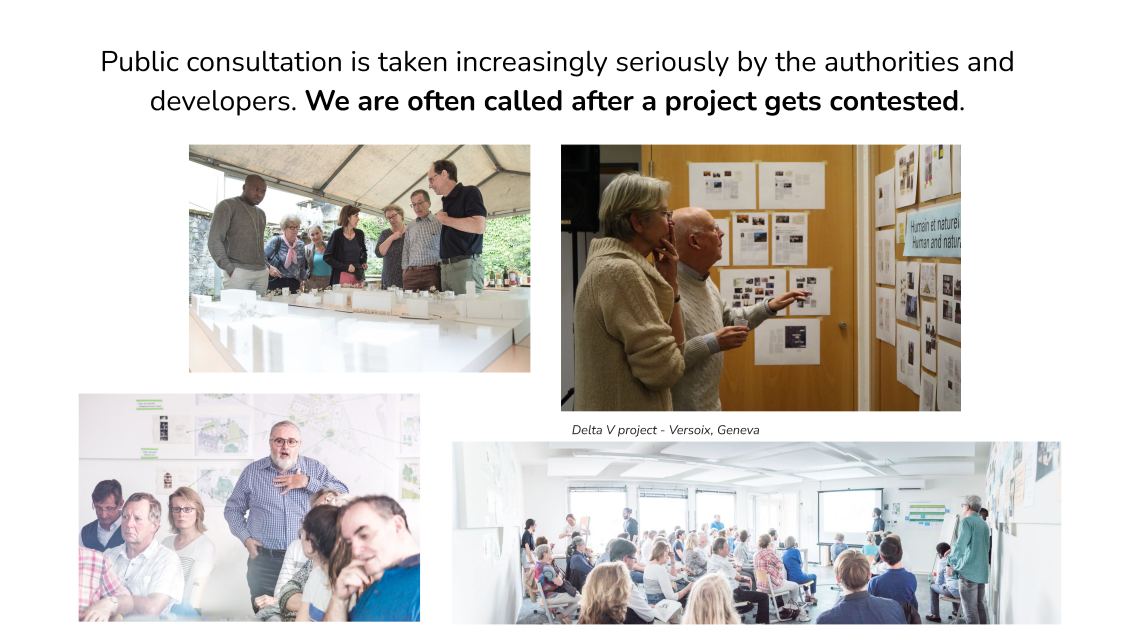
Swiss authorities and real estate developers take public consultation increasingly seriously. We are often called after a project gets contested or rejected by vote. Sometimes we work on projects from their inception, which is of course the way it should be done.
When we come to a project after a first version was rejected by a referendum, the first question we ask to people who opposed the project is always: “are you against any form of development or would you be open to another plan?” The vast majority of people are not opposed to development as a matter of principle. They just want something that makes sense to them and adds to their quality of life.
While modern urban planning has turned urban development into a technocratic affair, led by experts, investors and politicians, it wasn’t always the case. Participation in the production of our habitat is nothing new. In fact it is something that has always existed in Switzerland and in every part of the world. Before we created institutions and corporations that have taken on the role of producing habitat for us, people were actively involved in the construction of their houses, in the edification of monuments, and even in the provision of infrastructure. People have a natural propensity of shaping their milieu. When this impulse is denied, it creates a deep sense of frustration and powerlessness.
We must recognize our collective strength and the resources we have access to: every locality has human capital (skills), existing constructions, and a rich natural ecosystem (even the most urbanized places). We must trust each other and ourselves and reclaim our collective capacity to shape our habitat.
This requires communication between people, but also with the authorities. As Melvin Webber stated is "no linguistic accident that “community” and “communication” share the Latin root communis, “in common.”" It is our ability to communicate that provides us with meaning and a shared sense of purpose. We must evolve our institutions and our ways of functioning so they become a little more open to whatever seems to be out of the box.
Collective, cooperative and participatory construction of habitat is part of the human experience. It is about dealing with each other as much as dealing with our environment. It is still very much alive in Swiss culture, just as it is alive in Indian, Japanese and every other culture in different forms. These processes are social and political in nature.
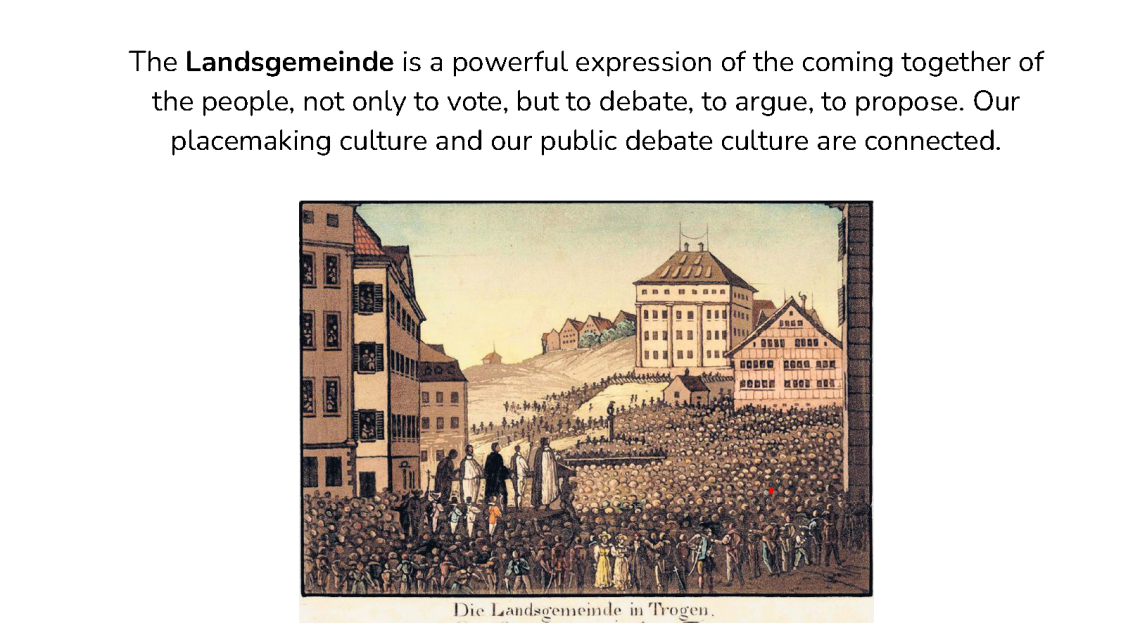
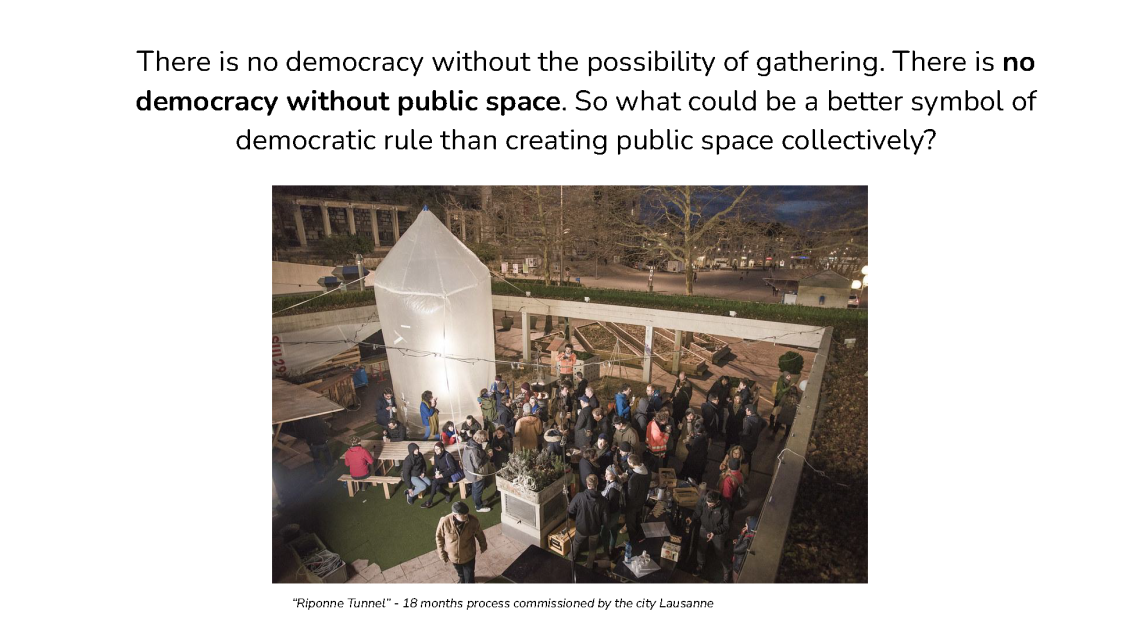
The Landsgemeinde is a traditional democratic assembly in a large public space, where people vote by a show of hand (or back in the days, their swords - and yes, it was only open to certain men). Still practiced in a few parts of Switzerland, it has been almost totally replaced by the universal ballot box. It is still however part of Swiss mythology and a interesting representation of the coming together of people, not only to vote, but to debate, to argue, to propose. There is no democracy without the possibility of gathering. There is no democracy without public space. So what could be a better symbol of democratic rule than creating public space collectively?
Participation does not need to be seen as opposed to modern construction technologies and planning methods. The urbz team has been involved in several placemaking projects in Switzerland (as well as India and other parts of the world). In Lausanne, we conducted a 18 months long participatory process, involving hundreds of people to re-imagine the largest public squares in the city: place de la Riponne et place du Tunnel.
In Geneva we are currently finalizing a landscape project for the The International Federation of Red Cross and Red Crescent Societies (IFRC), which is the world's largest humanitarian network. We consulted dozens of staff, residents and experts to plan, build and activate this park dedicated to the humanitarian and environmental values of the Red Cross and Red Crescent. In this project, we are not just acting as experts in public participation, but also as urbanists, architects and botanists.
We’ve also led a 3 years long participatory process to transform a fully concretized school playground, which produced a lot of heat, into a cool and green island. In the process of creating a programmatic plan for the architects, we conducted workshops, explorations, discussions and visits with dozens of teenagers, teachers and neighbors.
What did we learn from these experiences? Participation works. It not only creates better projects from a programmatic point of view, but also makes them more feasible politically. The cost of participation is nothing compared to the benefits it generates. A qualitative approach to placemaking works better than a purely quantitative one. What’s really important to realize however is that a participatory process will generate another kind of space than a classic architectural/space driven project. The acceptance of the urban morphology generated through participation may need a paradigm shift in architectural culture.
This shift may allow us to collectively produce another kind of city. That is a city that is denser yet humane, connected yet local, diverse yet homegrown. This city has embedded evolutionary capacity and it is more deeply connected to the planet, the ecosystem and people. We call it the Natural City. It is a city that is creative in the sense that it follows a logic of emergence. It is being created through use and therefore it is constantly reinvented by the users.
What do spray painted cats on walls, masked motorbikes and a pop-up staircase have in common? The Khotachiwadi Imaginaries workshop.
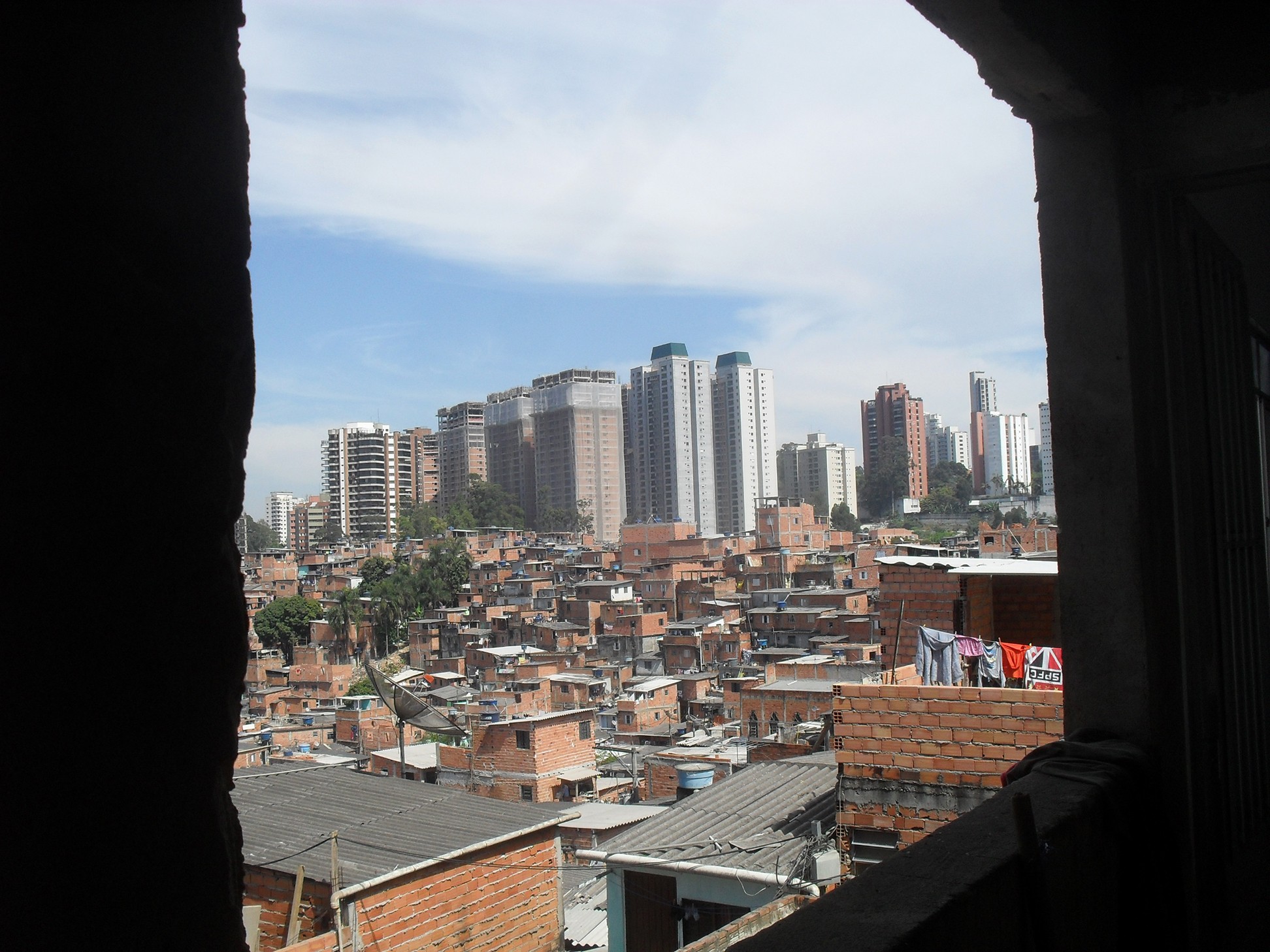
The start of a collaborative initiative that seeks to interweave technical and scientific aspects of architects with knowledge of the local mason and the lifestyle of inhabitants.


June 4-9, 2019
The Urban Typhoon workshop in Kochi is open to all citizens and visitors interested in working in urban areas and are willing to engage with communities participation. Together we will explore the challenges and opportunities that this historical and rapidly developing city is facing. The objective is to produce creative alternatives for the future of Kochi. The workshop will be held at various locations across the city starting from Folklore Cultural Theater, Fort Kochi.
For registration send an email to urbantyphoon@entekochi.net or kochi@urbz.net